On The List
The Five Weirdest Cameras on my "To Buy" list

I’ll start this whole thing off by acknowledging that I am very fortunate to have everything that I do. I live a great life that has allowed me to see and experience places and things I never imagined for myself when I was young. I’ve inadvertently taken the advice you always hear from any photographer who already has every grail-level piece of gear you can think of- “You don’t need another camera. You’d be better off spending that money on travel.” I’m now in my fourth year of “traveling,” and I can confirm that I have been immensely better off for it. My photography, likewise, is far more interesting and varied than it would be if I were still just walking around Hermosa Beach, CA with my FM2 over my shoulder every day.
To be fully transparent, it’s also not like I’ve gone without when it comes to gear. When my wife and I hit the road, I brought along my favorite 20 cameras, about 200 rolls of film, and a few of my favorite developers along with plenty of extra lenses and accessories. Obviously, this takes up a not inconsiderable amount of the cargo space we have available in our van as we move from place to place around the country. As we’ve travelled around, I’ve sold a few cameras, bought a couple more, and now have 18 or 19. My film stash peaked last spring somewhere between 350 and 400 rolls, split more or less evenly between 35mm and 120. I keep it in coolers when we are traveling from place to place, and put it all in the freezer when we get where we’re going. All of that said, like everyone else, I’ve still got a whole list of things I want to buy as soon as we find somewhere to settle down and space isn’t at such a premium (or maybe before then). I realize there isn’t anything at all unique about that, and under normal circumstances I wouldn’t assume anyone would care. There are a few things, however, that have found their way to the top of my “gear to buy” list which I think many of you will find interesting.
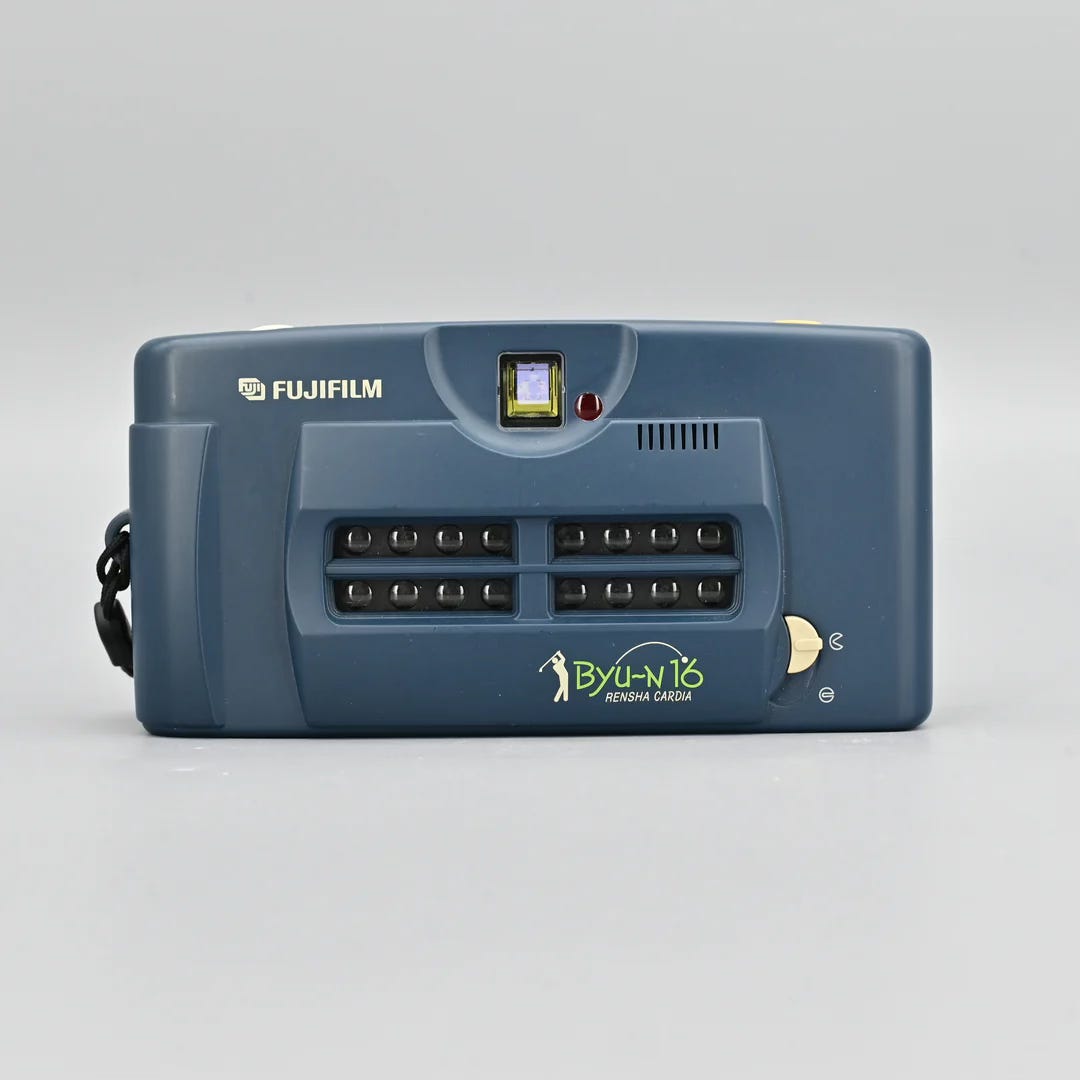
Fujifilm Rensha Cardia BYU-N16: I’ll start the list off with what is probably the oddest of the bunch- the BYU-N 16. This is a camera that was originally designed for golf-swing analysis. It shoots 16 very small frames one after another in quick succession. The idea at the time wasn’t to capture fine details, just to be able to conduct frame by frame analysis of a golfer’s swing mechanics. Obviously, my interest doesn’t lie in lowering my handicap. But over the intervening decades since this thing was released, the world has changed and now those 16 frames can be stitched into wonderful little 16 frame analog GIFs. They also made a down market version called the BYU-N 8, which took half as many frames, but is less than half as appealing for obvious reasons. This is a camera that has been on my radar (and my list) for quite some time, so you can imagine my shock when it got a brief mention on the Camerosity podcast and none of the hosts seemed to know what it was.
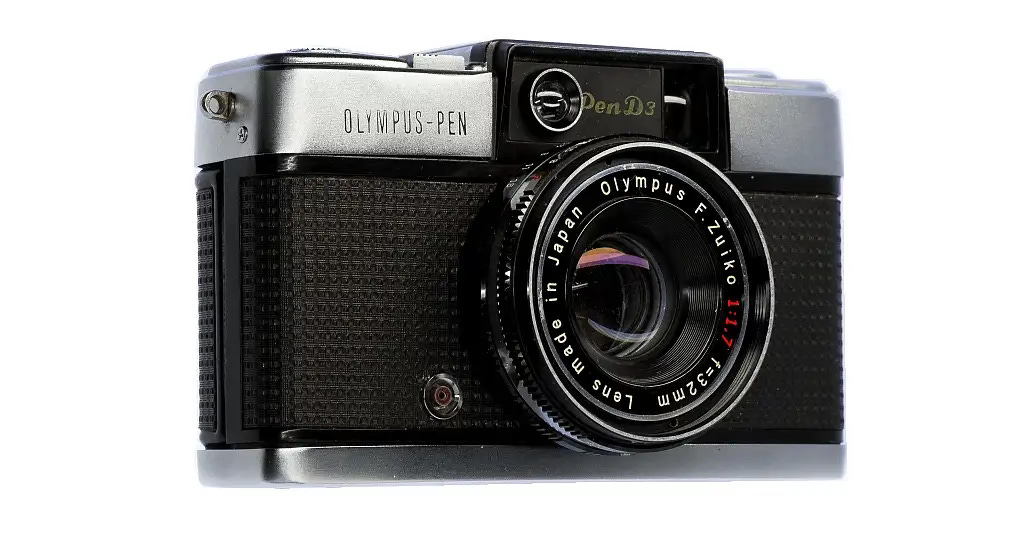
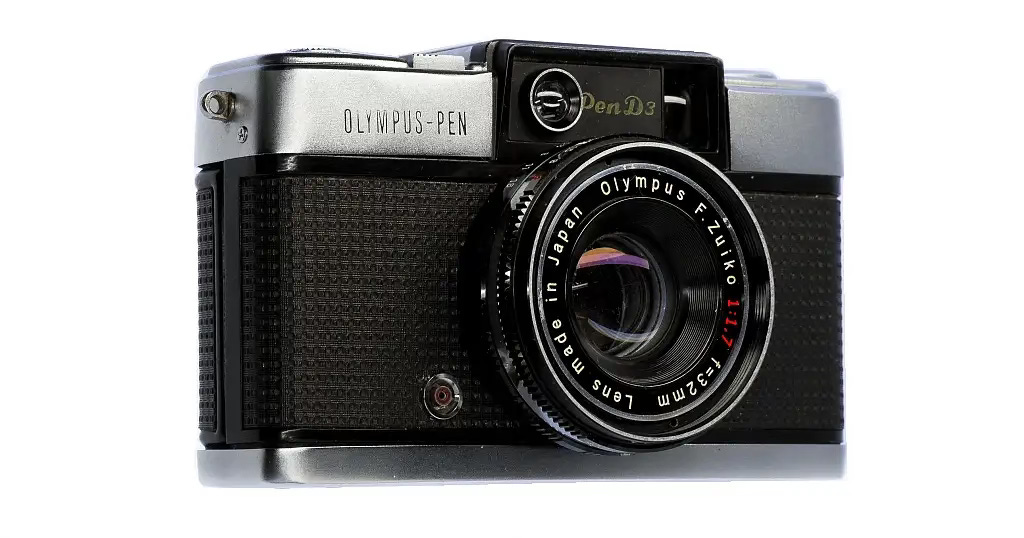
Olympus Pen D3: I’m sure most who will read this have at least passing familiarity with the Olympus Pen family of half-frame 35mm cameras. The lore is deep and complex, but I’ll summarize as concisely as I feel I can. The original Pen and most of its successors were the point and shoot cameras of their day. They were limited in function, often having only a couple of shutter speeds and relatively slow lenses, with selenium light meters that are mostly all long-dead. One notable exception is the Pen F series, which shares exactly none of these characteristics with the other Pen cameras. It is a nearly pocketable full-featured interchangeable lens SLR with a unique rotary shutter which negates need for a pentaprism on top of the camera. The other big standout of the Pen family, however, is the D series, and the D3 in particular. Although the D3 can be operated in a mechanically controlled automatic mode, it also has full manual controls, a reliable CDS cell meter, and a nice, fast f1.7 lens.
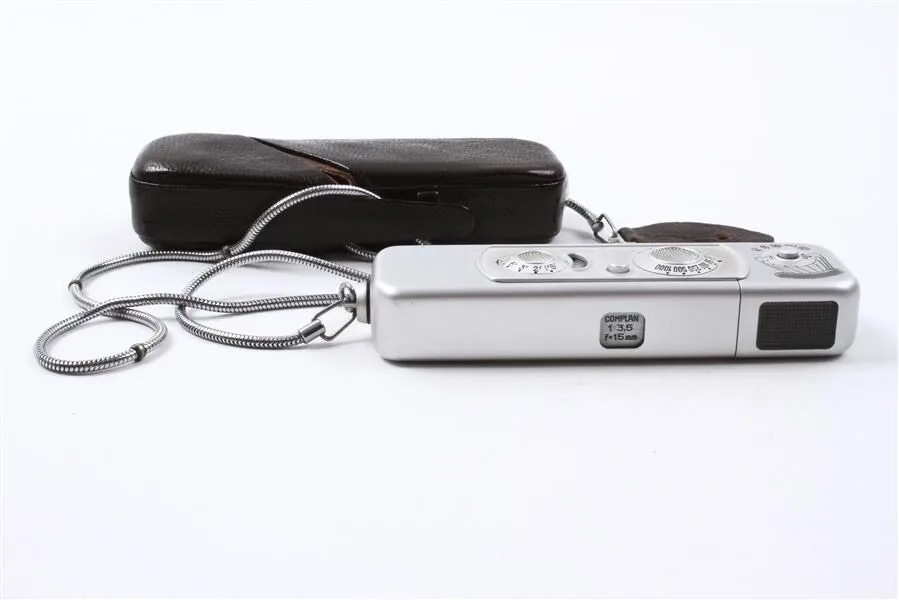
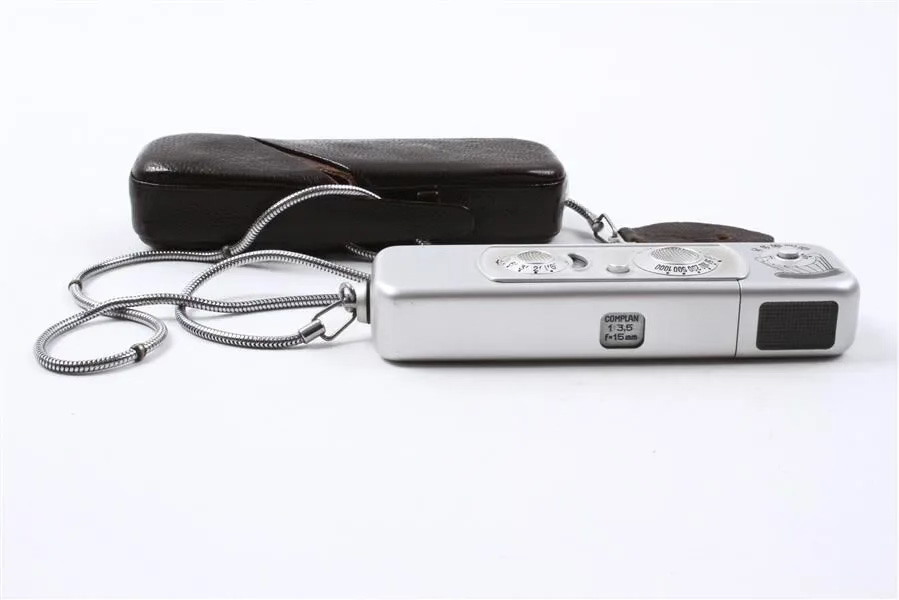
Minox B: I promise, not all of the cameras on this list shoot tiny frames. This one, however, is possibly the camera most known for its tiny subminiature frames. As someone who has always been interested in reading about spies and espionage, my interest in owning a Minox B actually predates my interest in photography itself. And I suppose there isn’t really much standing in the way of me just getting one. The cameras are inexpensive and obviously don’t take up a meaningful amount of space. The accompanying gear I would need to make it all work the way I want it to, however, absolutely does. In addition to the camera, I would need to buy a film slitter, a custom tray for my scanner, and a Minox specific developing tank, as I’ve seen some pretty mixed results from those who use custom Patterson and Jobo reels- it seems that the emulsion presses against the edge of the spiral guide on the reel and doesn’t always get developed evenly. Nonetheless, the appeal of always having a tiny camera in my pocket for capturing little detail shots or just everyday life is very appealing, and if I slit and develop the film myself it’s also extremely inexpensive.
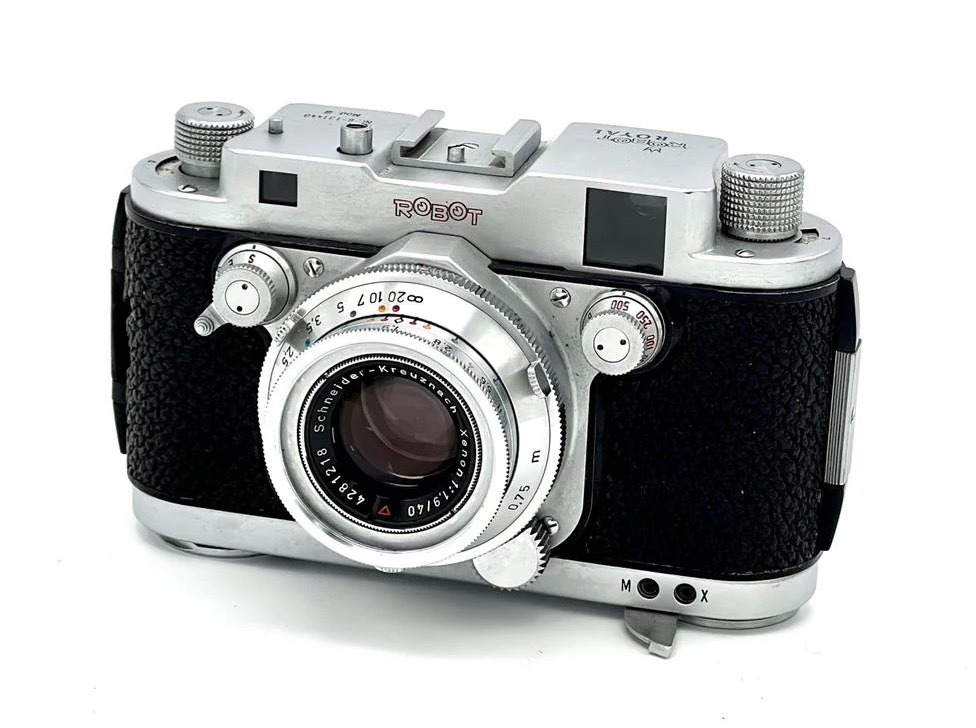
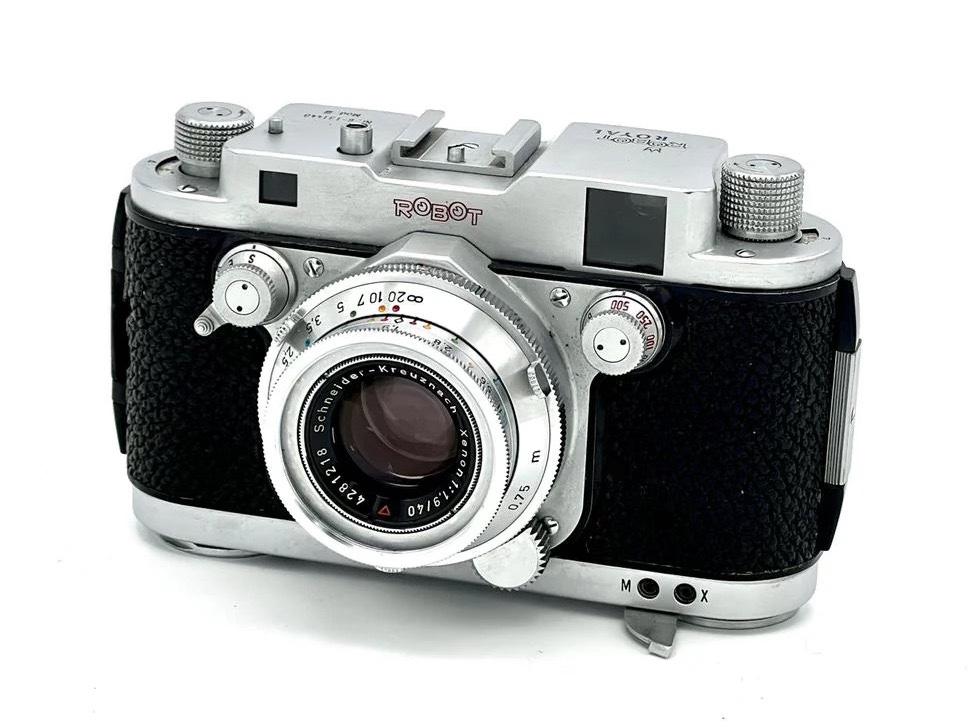
Robot Royal 24: By “modern” film camera standards, the Robot Royal 24 is a very weird camera. For starters, and as you may have guessed by the name, it shoots 24mm x 24mm square frames. Personally, I love shooting squares and this is without a doubt the primary reason I want one of these cameras. But even if one were to go for the Robot Royal 36, which shoots conventional 24mm x 36mm frames, there is just no getting around the fact that these are fairly odd machines. The inventor of the original Robot I was the son of a German watchmaker, and it shows in the designs of these cameras. They are clockwork cameras, relying on tension from a tightly wound mainspring to cock and fire the shutter as well as advance the film to the next frame. Because of this unconventional design, the Robot Royal 24 was able to fire two dozen frames in only three seconds…in 1953. Other design quirks include a tiny, front mounted knob for shutter speed selection, an uncommonly well-designed scale focus system as well as a very accurate rangefinder with a long base length, a cool ass logo, a knob that spins as the film advances, a full complement of lenses by Schneider and Zeiss, not a single frame line in the the viewfinder for any of those lenses by Schneider and Zeiss, and a film loading system that is a well-known cause of insanity for users. “So,” I hear you asking, “If you want an interchangeable lens rangefinder that shoots 35mm squares but the Robot is this weird, why not get the Zeiss Tenax II?” Uhh, have you seen these two cameras? The Robot may actually be the best looking camera ever conceived. The Zeiss? It looks like the forbidden love child of a Contax IIIa and a Zeiss Contarex conceived in the depths of Chernobyl’s reactor number four. And sure enough, if I were ever to touch one I’m sure it would immediately induce nausea, vomiting, and burn my skin. It is easily, and by a long way, the ugliest camera I can think of. If you’ve never seen one, I’m not going to ruin your day by including a photo. I would advise you to make sure no children or people with weak constitutions are in the room before you Google it, lest they be sick at the sight of it.
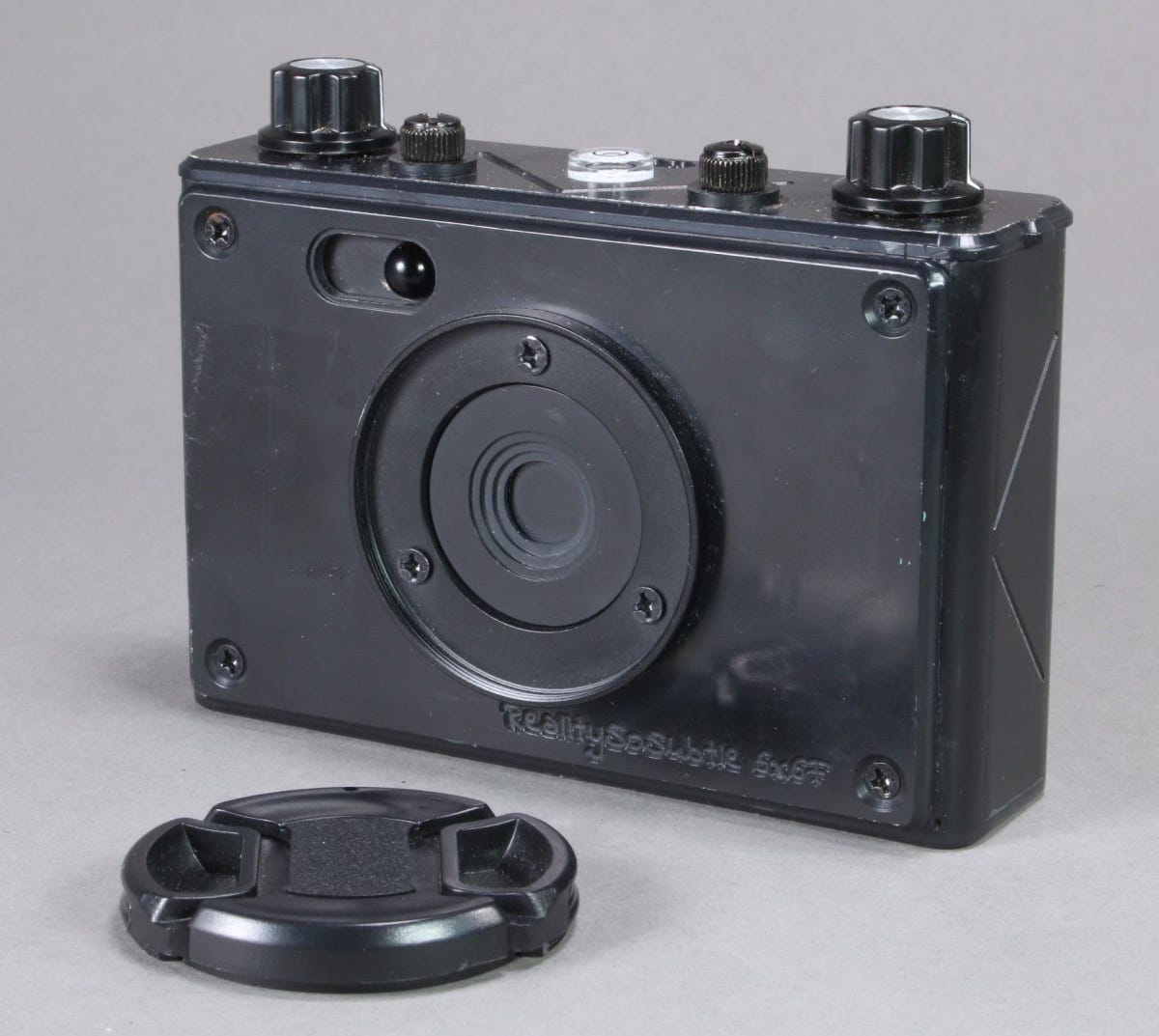
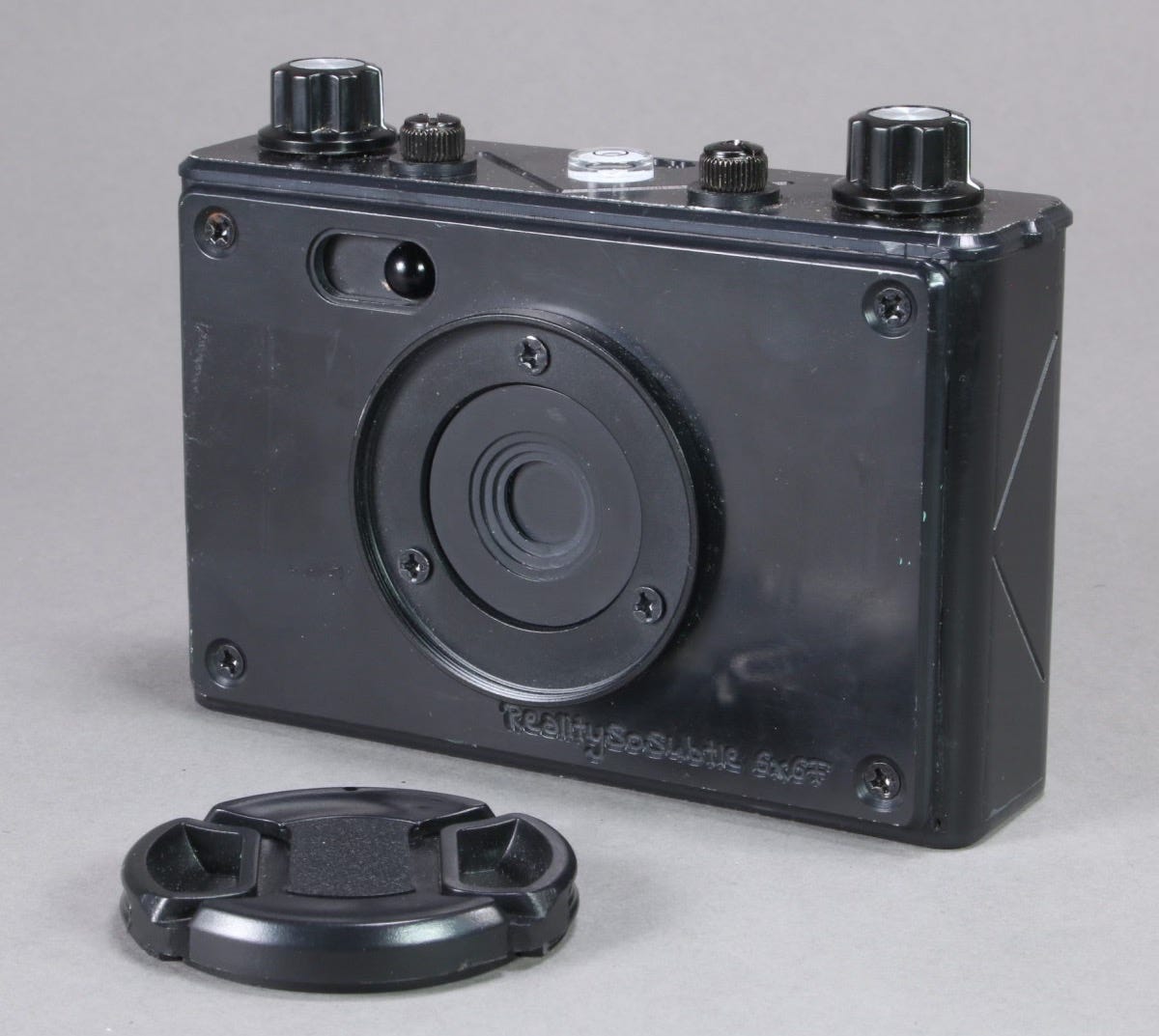
RealitySoSubtle 6x6F: Admittedly, this is not the most attractive of the many 6x6 pinhole cameras on the market. It is, however, probably the best of them. Despite being made from plastic, the build quality is apparently very high and the pinhole itself is laser cut from 50 micron thick disc and render (relatively) stunningly sharp images. Each camera is manufactured by James Guerin in his workshop using CNC machining and manual processes. I know that with pinhole photography, a lot of people seem to be of the opinion that you need to either “go big or go home,” since larger negatives produce noticeably sharper and clearer images. This difference is far more noticeable in pinhole photography than it is in regular, “traditionally lensed” alternative formats. One of the things I personally really like about pinhole, though, is the vignetting. If I shoot a square, the vignetting will be uniform around all edges and corners. Shooting 6x9, 6x12, or 6x17 pushes that vignetting toward the sides and away from the top and bottom edge of the frame, which I don’t find to be particularly attractive. And like I already mentioned, I really like composing square frames. 4x5 (AKA 5x4 if you’re in the UK) is close enough to square to warrant consideration, but then I would need to buy a new developing tank and a new scanner, as my current equipment/workflow only accommodates 120. Additionally, I find it unlikely that I will ever want to go out to shoot pinhole exclusively, so having a small camera is important. That way, I can add it to a bag of my regular cameras and not feel overly burdened.
Get the 4×5, do it, dooooo it. My misery needs more company.
Awesome write up, that robot camera looks absolutely sick.
I haven’t even started shooting film again, and yet you have already reactivated the acquisitive virus that seems to have taken over my brain! The Robot is such a beautiful camera; but if I see another Olympus PEN I shall probably go mad!
Seriously, thank you for this: a wonderful list of beauties!